
Start a Syracuse Residents Search
A Syracuse residents directory is assembled from records with different purposes. The Davis County Property Search is the best first stop when an address or owner name is known. It offers owner-name, property-address, parcel or serial number, and document-entry paths. The map adds context around a parcel. Utah Vote Search can check one name with date of birth, street, city, and ZIP fields, but it reports a registration record at a snapshot, not every person at a home. Courts identify parties and case roles. A deed index identifies people tied to a recorded instrument. None of those labels alone proves current physical residence.
Use the smallest useful question. A current owner question belongs with the parcel card and recorder. A person who may have registered at an address belongs with Vote Search, subject to protected fields. A past household question belongs with city directories, census material, newspapers, cemetery records, and the county deed chain. If the answer is not online, a specific request to the custodian is stronger than a broad request for everything about a person. Syracuse City Recorder requests must be in writing and can ask for inspection or copies.
- Search Davis County Property Search by owner or address. Save the parcel ID, situs address, mailing address, and legal description.
- Run Utah Vote Search with the name and the known street, city, or ZIP. Treat the result as registration evidence for its file date.
- Use the Davis County Recorder path for the latest deed, then compare the grantor and grantee names with the parcel.
- For an older household, ask the Syracuse Branch or museum reference staff for a directory, newspaper, cemetery, or family-history lead.
- When an index stops, submit a narrow written request under Utah GRAMA with the address, date range, and record type.
Where Syracuse Resident Records Live
The public trail runs through several custodians in Syracuse and Davis County. The county recorder keeps recorded real-property documents, ownership indexes, legal descriptions, plats, and related land records. The assessor/property search supplies the parcel view. The elections office controls voter-file access. Syracuse City Recorder keeps municipal records from incorporation and routes written requests. The county clerk and court divisions hold other record series, while the library and museum provide reference help for older names. Each office answers a narrower question than a universal residents directory would.
Davis County Recorder
61 South Main Street
Farmington, UT 84025
801-451-3225
Davis County Assessor
61 South Main Street
Farmington, UT 84025
801-451-3250
Syracuse Parcel Search Fields
The Davis County Property Search gives several ways into the same parcel record. Choose the route that matches the evidence in hand. An address search is a map and situs route. An owner search is a name route. A parcel or serial number is the stable join key for the recorder, GIS, tax, and deed trail. A document-entry search helps when a recorded instrument number is already known.
| Field or control | How it helps |
|---|---|
| Owner Name | Finds the indexed owner trail when the name is known. |
| Property Address | Uses the address suggestion and map to reach the situs parcel. |
| Parcel or Serial Number | Joins the parcel to tax, GIS, recorder, and legal-description records. |
| Document Entry Number | Opens a known recorded instrument path. |
| Map Select | Lets the searcher click a target or nearby parcel and follow tax or legal links. |
Preserve both addresses. The situs address is where the parcel sits. The mailing address is where tax or owner correspondence goes, and it can be outside Syracuse. The difference is a lead for a lawful records check, not proof of where an owner lives. Recorder staff state that they will not perform a patron's search by phone, so arrive with the parcel ID, document number, or legal description ready.
See the Syracuse street directory for a full address-by-address method, including adjacent parcel work.
Open the Syracuse City records request form to compare its written description, inspect-or-copy choice, cost authorization, and fee-waiver prompts.
The form is the fallback when a municipal record is not exposed by a search page.
Utah Voter Records Have Limits
Utah Vote Search accepts first name, last name, date of birth, street address, city, and ZIP. That makes it useful for testing one person and one address, not for browsing every resident in a ZIP. The public voter file can include residential and mailing address, precinct or district, status, party or unaffiliated choice, and vote history. Full-file access is a separate request. The current research notice lists a March 8, 2026 snapshot before May 25, 2026 and a $1,050 one-time file, so availability and price should be checked at the source.
Protected and at-risk records are withheld. Full date of birth, state ID or driver-license data, Social Security number, phone, email, and signature are private. Utah law also provides an at-risk designation through the Davis County Clerk. A registration match is time-bound and does not show unregistered household members, utility customers, or everyone who receives mail at the address.
Open the Davis County docket calendar to use its Syracuse Justice Court location, party, case, judge, attorney, and date controls.
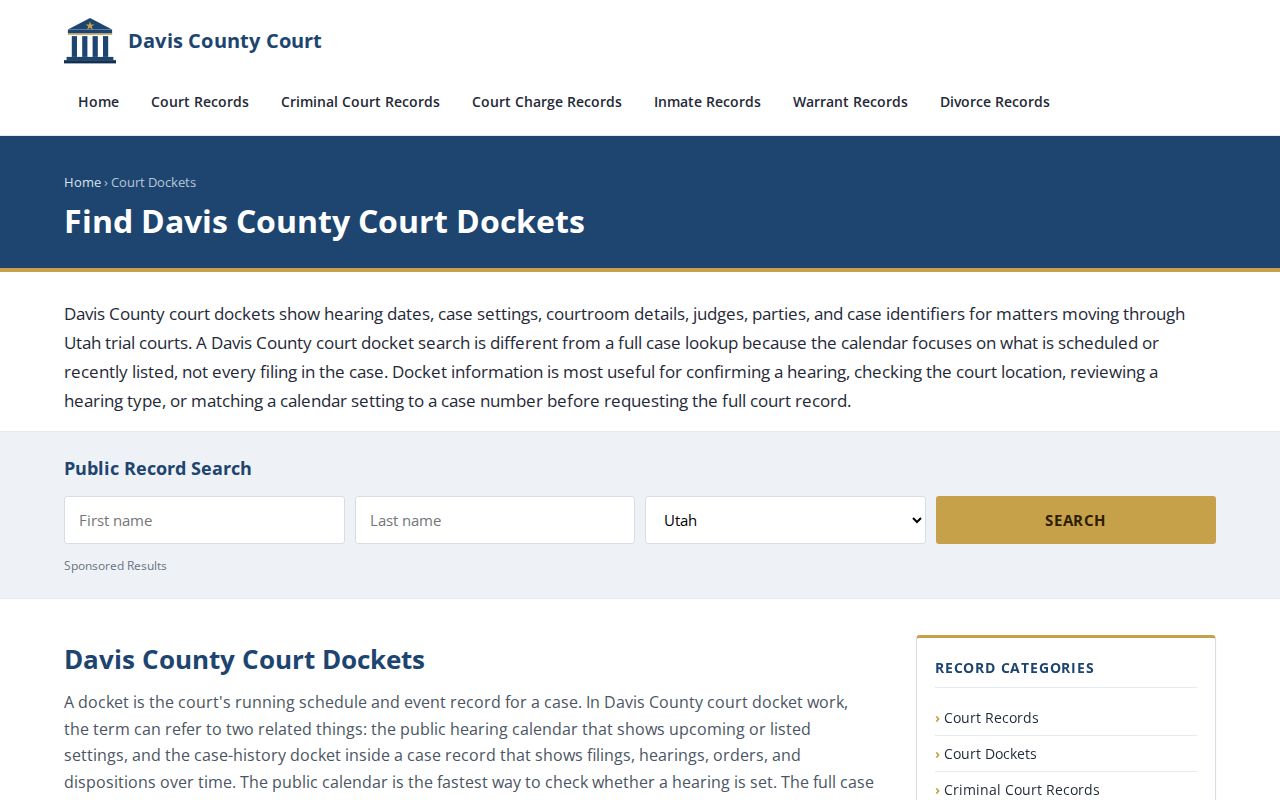
The calendar is a location-based name check, not a complete resident list.
Open the Utah Xchange help page to compare its party, case, date, history, and document fields.
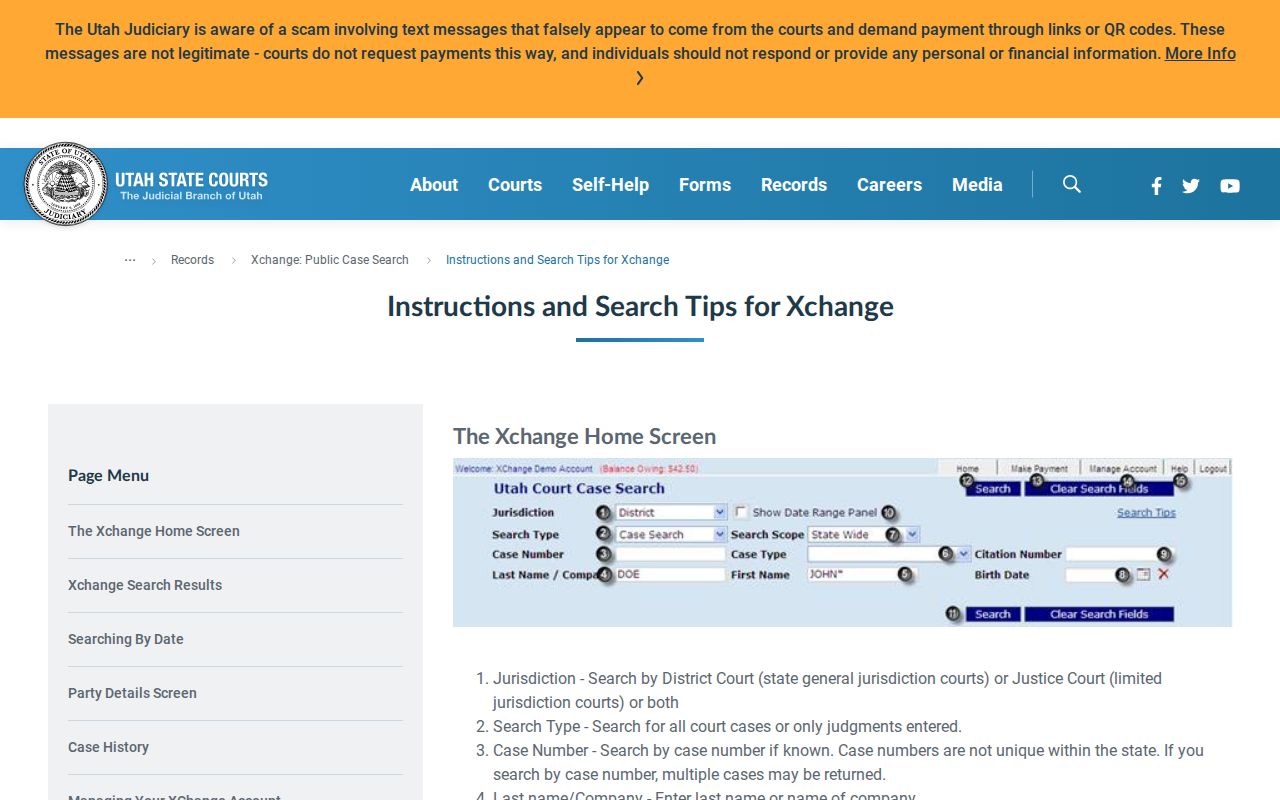
Xchange separates a court relationship from a current resident match and excludes sealed, juvenile, expunged, and private matters.
Current Syracuse Resident Sources
Current Syracuse directory work is a set of partial views. The property roll is strongest for ownership. Vote Search is strongest for one registration match. The recorder is strongest for a recorded transaction. City staff and business pages identify public roles or licensed activity, not a citywide resident list. HOA pages can show association context, but the state registry does not publish a complete member roster. Keep the record relation in the notes so a name is not mistaken for a household.
| Source | Who It Lists | Keeper | Access |
|---|---|---|---|
| Davis property and tax roll | Owners, parcel, mailing address | Davis Assessor / Recorder | Free search and map |
| Utah Vote Search | One registrant's address and status fields | Utah and Davis elections | Public fields with limits |
| Recorder index | Parties to deeds, liens, and other instruments | Davis County Recorder | Index, terminal, copies |
| Syracuse staff directory | Public city employee routing | Syracuse City | Free online |
| HOA and community sources | Association name or public context | Utah registry and associations | No complete member roll |
For one person, compare at least two independent relations. A parcel owner can be a trust, business, estate, or absentee owner. A court party may be a plaintiff, defendant, attorney, witness, or another role. A license record connects a person to a professional credential and city, not necessarily a home. The Syracuse resident lookup keeps those distinctions in the right order.
When a Syracuse Search Stops
Online discovery is only one access channel. Davis County keeps public terminals for recorder searching, and the Recorder, Assessor, Treasurer, and Clerk offices are together at 61 South Main Street in Farmington. The county clerk's Records Catalog uses ArchivesSpace-style descriptions with record title, date, and format. A catalog description does not promise that an image is online. Ask for the series, creator, date range, address or parcel, and preferred format.
Utah GRAMA requests go to the named custodian through the county's NextRequest route or the proper city or state office. A written request should identify the requester, a way to respond, and a reasonably specific record description. The county FAQ describes a general 10-business-day response framework, with extension notice when allowed. Inspection, mail, email, fax, library reference, museum appointment, and archival image routes each fit a different gap.
Syracuse City Recorder requests must be in writing. The form asks whether the requester wants to inspect or receive copies, includes cost authorization, and offers fee-waiver prompts for public benefit or an authorized representative. Utility account data is explicitly not public, so an address request should target permits, licenses, minutes, ordinances, or other responsive public records instead.
Official Syracuse Sources Compared
Different search channels trade speed for detail. A free index is useful for discovery, while a scanned instrument or certified copy carries a different level of proof. Compiled people-search data can be stale or merge similar names, so the official custodian should remain the final check.
| Source | Best use | What to verify |
|---|---|---|
| Davis Property Search | Find a parcel, owner, mailing address, or legal description | Owner is not automatic occupant |
| Davis Recorder / REDI-Web | Trace recorded transfers and obtain document images | Index is not the full instrument |
| Utah Vote Search | Test one public registration record | Snapshot and protected-field limits |
| Library, museum, Archives | Recover dated household and family clues | Exact holdings and image coverage |
Syracuse Court and Jail Results
Syracuse Justice Court serves the city's corporate limits and handles infractions, traffic matters, Class B and C misdemeanors, and small claims up to $20,000. The city reports mostly virtual proceedings, Wednesday appointments from 9 a.m. to noon, and separate filing windows. The Davis County calendar is the practical location filter because no Syracuse-only public name screen was exposed. Xchange is the statewide case repository and is billable for searches or documents.
Read the result as a relationship to a case. A docket is the court's running case record, including events and filings. A disposition is the recorded outcome of a charge or matter. A booking row is a jail custody entry, not a conviction. The Davis County Sheriff roster is a current jail list and warns that staff will not demand money, Bitcoin, or ankle-monitor payment by phone or text.
Check the Davis County Sheriff inmate roster for the fields and custody status it actually displays.
Sealed, expunged, juvenile, adoption, and other private court matters remain outside the public result.
Syracuse's Historical Resident Shelf
Historical Syracuse residents directory work depends on shelves and scans rather than one confirmed local run. Marriott's Utah City Directories collection provides searchable publisher, year, and place filters. FamilySearch displays 40,381 browse images in the Utah, Davis County Records, 1869–1953 collection. The Davis County Library Syracuse Branch offers reference help, scanning, interlibrary loan, public internet, and Wi-Fi, but its public location page does not state exact directory or obituary runs. Ask for the edition and year instead of assuming that a local title is complete.
A printed entry can tie a name to a street, spouse or widow notation, and sometimes an occupation or owner mark. A street section reverses the path from address to occupant. Census records fill decennial gaps; newspapers, the cemetery, and probate can explain a disappearance. The Syracuse city directory collections give the fuller reading method and the limits of the known runs.
Use the Utah DOPL Licensee Lookup when a name match needs a public professional affiliation check.
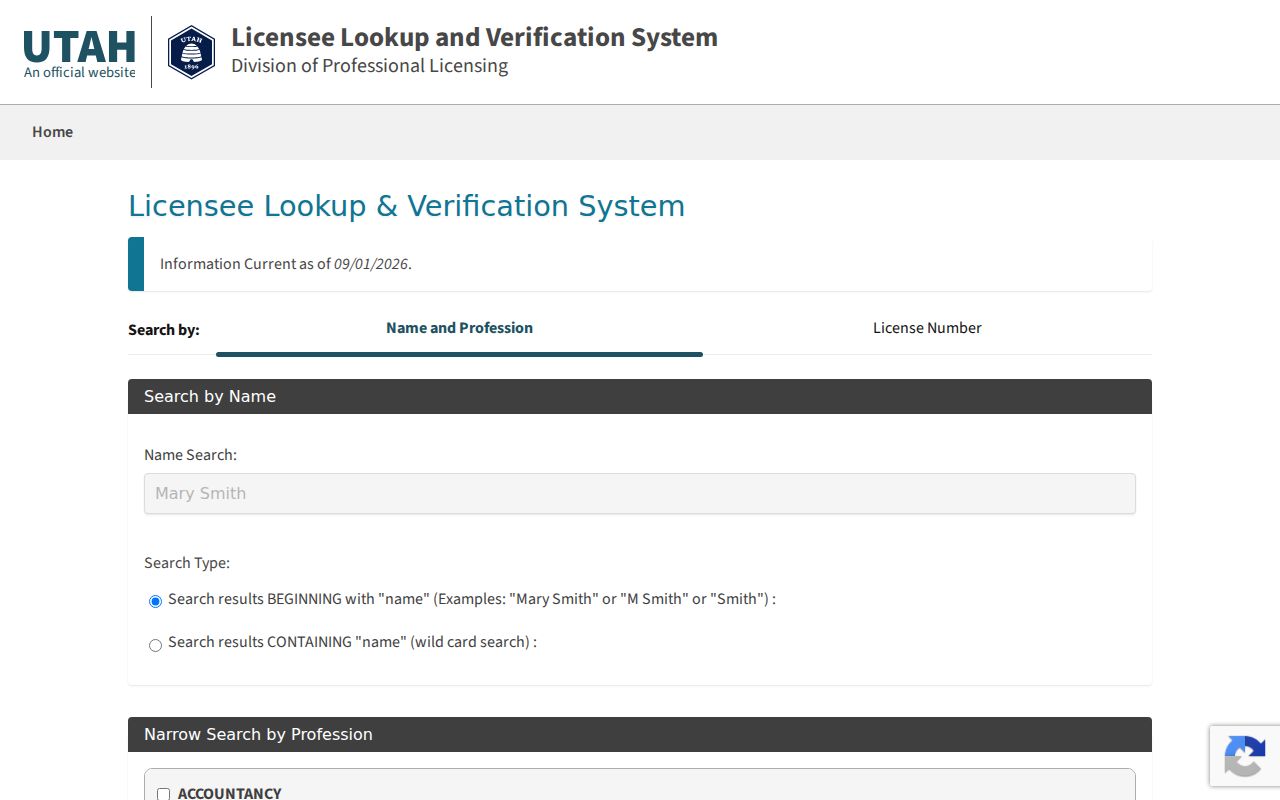
Its result can show name, city, profession, license number, and status, but a license city is not a home address.
Open the Utah Construction Business Registry for basic and advanced filters on type, classification, company text, license number, city, state, ZIP, and trade.
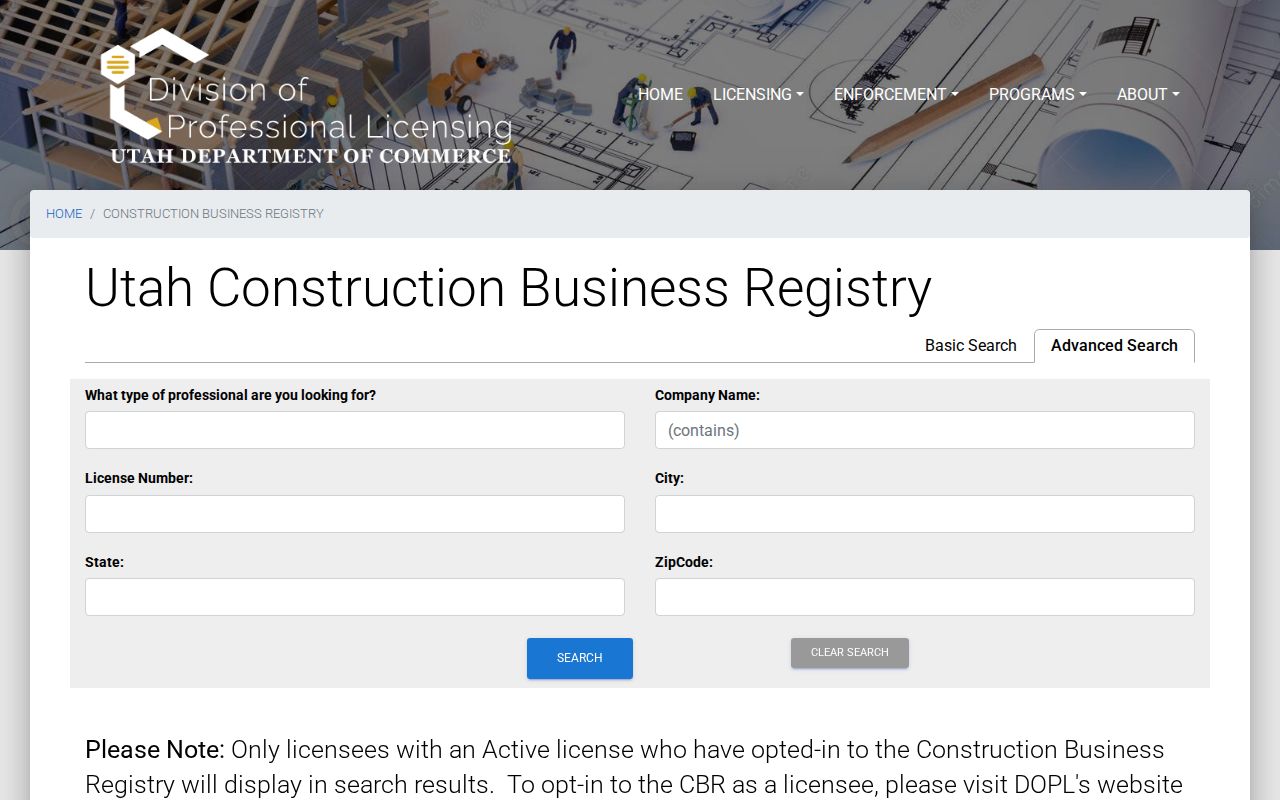
It is a business lead, not a substitute for a Syracuse resident record.
Records vocabulary. A parcel is the mapped land unit. An index is a finding aid, not the full document. A roll is a recurring list kept for an official purpose. A criss-cross directory is arranged by street or address so a search can move from place to person.
Syracuse History Leaves Search Clues
Syracuse's records make more sense when the local time line is kept beside the name search. The town incorporated in 1935, and a September 13, 1950 proclamation made Syracuse a third-class city with a population of 837 and Alma O. Stoker as first mayor. The City Recorder's municipal record line begins with incorporation, while older land and family material belongs more often to Davis County, the museum, the library, or Utah State Archives.
Agriculture gives older searches useful terms. Official city history records sugar beets in 1893, potatoes in 1894, tomatoes in 1898, peas in 1902, and a Syracuse Canning Factory beginning in 1898. During World War II, a Clearfield naval supply depot and a German POW camp partly in Syracuse shaped local newspaper, military, and cemetery references. Search the surname with Syracuse, Clearfield, the depot or camp terms, and a date range.
There is also a concrete Davis preservation story. A USHRAB project unfolded, scanned, and rehoused about 2,800 1869-era oaths and bonds. That is a better archival lead than a generic promise that every old county book is online. Search the Utah State Archives catalog by creator, series, date, and format, then ask for the record image or a supervised reference route.
Syracuse ZIP and Privacy Checks
ZIP 84075 is the Syracuse focus in the official Utah ZIP listing. Nearby 84015, 84016, and 84089 belong to adjacent Clearfield or Clinton postal areas, while 84037 is a Kaysville comparison. Davis County's CHIP map groups Syracuse and Kaysville in one small area using 84037 and 84075, which is statistical geography, not a city-limit rule. USPS offers ZIP by address, ZIP by city and state, and cities by ZIP. Its standardization notice does not confirm a person at an address.
Syracuse street numbers count from Clearfield's 0/0 origin. That local rule can prevent a bad join when an old address, modern parcel, and postal record use different wording. Utah SGID address points and ZIP polygons are useful cross-checks, but the state describes address points as locally maintained and ZIP polygons as approximate delivery geography. Preserve the municipality, postal city, ZIP, situs, and mailing address as separate fields.
Public records are for lawful personal research, family history, civic understanding, and consumer safety. Utah's Safe at Home program and at-risk voter designation protect some actual addresses. Do not try to bridge an assigned address to a protected one. A public result should never become repeated unwanted contact, surveillance, or publication of a private location.
Use care with names. A Syracuse owner, voter match, court party, licensee, or jail row is not automatic proof of current residence or guilt. Confirm the record relation with the proper custodian and keep sensitive details out of public notes.